
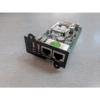
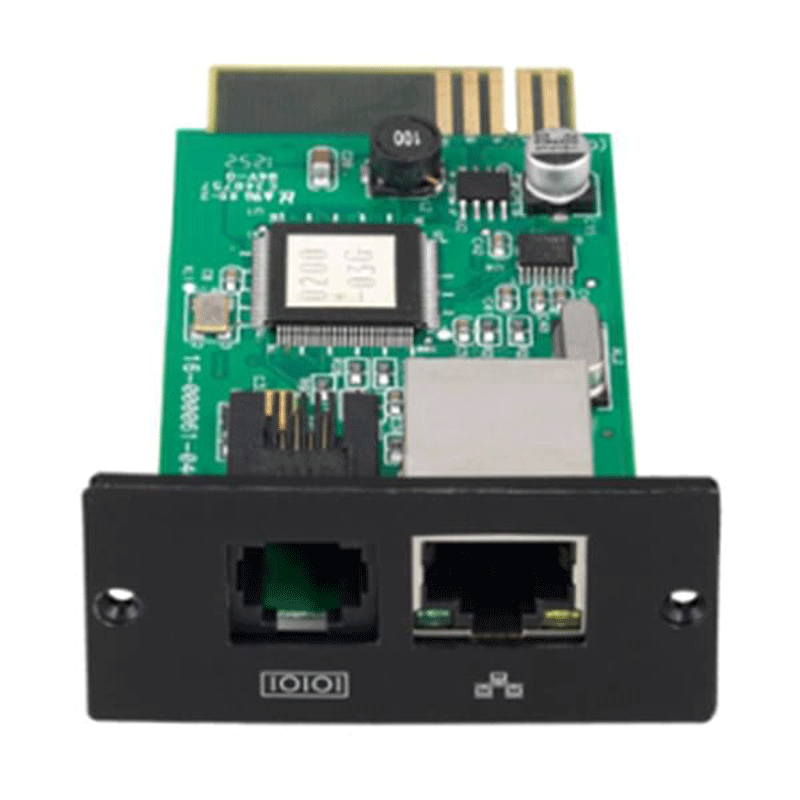
Network SNMP Card KPM550 – Big Slot UPS Monitoring & Remote Management
About the Product
-
Network SNMP card for UPS monitoring (big-slot version)
-
Enables remote UPS status monitoring via LAN/WAN
-
Supports SNMP protocol for integration with network management systems
-
Sends alerts and notifications for power events and faults
-
Allows remote UPS control (shutdown, restart, scheduling) where supported
-
Built-in web interface for easy configuration and management
-
Ideal for data centers, server rooms, and industrial UPS setups
Network SNMP card For UPS Monitoring – Big Slot, KPM550
What the KPM550‑BS Is
The KPM550‑BS is a network SNMP (Simple Network Management Protocol) card designed for enterprise UPS (Uninterruptible Power Supply) systems with a big‑slot expansion interface. When installed into a compatible UPS unit, this card allows the UPS to be monitored and managed over a network (LAN/WAN/Internet) — giving remote visibility into power conditions and control over the UPS.
Overview Description
The KPM550‑BS is a professional‑grade UPS network management accessory that provides real‑time monitoring and control of UPS performance via standard network protocols. It integrates with your network so administrators can check power status, set notifications, and take actions (like remote shutdown or restart) without being physically at the UPS location. It’s built for enterprise, data center, and industrial environments where reliable power monitoring is mission‑critical.
KPM550 Network SNMP Card – Technical Specifications
🔹 Model: KPM550 built‑in network SNMP card for UPS monitoring (requires Big expansion slot).
🔹 Network Protocols Supported: SNMP v1, SNMP v2, SNMP v3, HTTP/HTTPS, Modbus TCP/IP.
🔹 Network Interface: 10/100 Mbps RJ45 Ethernet port.
🔹 IP Support: Supports IPv4 and often IPv6 (in newer revisions).
🔹 Web‑Based Interface: Built‑in web UI for configuration and monitoring.
🔹 Operating System Compatibility: Works with multiple OS platforms (Windows, macOS, Linux).
🔹 Remote Management Features:
-
-
Remote UPS monitoring and status reporting.
-
Remote UPS shutdown, restart, and self‑test (if UPS supports).
-
Scheduled tasks (timed self‑test, power on/off, battery discharge).
-
🔹 Alarm & Alerts:
-
-
E‑mail alarm notifications for power events.
-
SNMP traps for event integration into NMS systems.
-
🔹 Historical Logging:
-
-
Stores up to 50 000 historical data records.
-
Stores up to 5 000 historical event logs.
-
🔹 Multi‑User Management: Role‑based permission management for secure access.
🔹 Time Synchronization: Built‑in ultra‑long life system clock with automatic timing sync.
🔹 Expansion Support: Can connect to 2‑channel temperature & humidity modules (via RS‑485).
🔹 Interfaces:
-
-
RS‑485 port for external monitoring modules.
-
USB ports (for peripherals like SMS modems).
-
🔹 Event Handling:
-
-
Full event recording and handling with notifications.
-
🔹 Networking Modes: Supports LAN, WAN, Internet, and wireless Ethernet connections.
Key Features
-
Big‑Slot Design: Built for UPS models requiring a large expansion card form factor.
-
Remote Monitoring: View UPS status and metrics (input/output voltage, load levels, frequency, battery health) across your network.
-
SNMP Support: Works with SNMP v1/v2 (and often v3) for integration with network management systems.
-
Event Notifications: Send traps or alerts for power events, faults, or thresholds.
-
Control Functions: Remote initiation of UPS actions such as scheduled shutdown, restart, and self‑tests (depending on UPS support).
-
Web Interface: Manage and configure settings through a built‑in web GUI.
What It’s Used For
This SNMP card is installed inside a compatible UPS system to:
-
Enable remote status monitoring over IP networks.
-
Integrate UPS health data with centralized network management tools.
-
Receive alerts for power anomalies or failures.
-
Take remote UPS actions where supported (e.g., restart, scheduled tasks).
Benefits of Using KPM550
✔️ Proactive Power Management — Early warning alerts help prevent downtime before issues escalate.
✔️ Remote Oversight — Manage UPS units from anywhere on your network.
✔️ Historical Insight — Analyze trends and historical events to troubleshoot or optimize performance.
✔️ Enterprise‑Grade Monitoring — Designed for data centers, IT networks, and critical infrastructure.
Typical Usage Scenarios
-
Data centers and server rooms — track UPS conditions in real time.
-
Enterprise IT networks — centralize UPS management across multiple units.
-
Industrial facilities — prevent downtime by monitoring power infrastructure.
Be the first to review “Network SNMP Card KPM550 – Big Slot UPS Monitoring & Remote Management”
Related products

APC Backups

APC Backups

APC Backups


APC Backups


APC Backups
APC Backups
Reviews
There are no reviews yet.