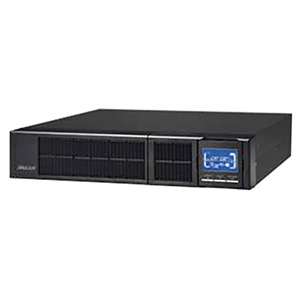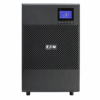

Eaton 9355 UPS
About the Product
-
Eaton 9355 UPS
-
Three-phase, online double-conversion UPS
-
Provides clean, continuous power for critical systems
-
Power range: approx. 10–30 kVA
-
Internal batteries with optional external battery cabinets
-
Suitable for data centers, IT rooms, and industrial applications
Eaton 9355 15kVA 13.5kW 220/220V 32-Battery 2-High 3-Phase UPS w/2yr Warranty
Description
The Eaton 9355 UPS (formerly the Powerware 9355) is a three-phase, double-conversion online UPS that provides a complete power protection solution. In a footprint that is up to 75 percent smaller than comparable UPSs, the 9355 UPS comes complete with internal batteries, an integrated power distribution module, and a maintenance bypass switch. Without the need for large external battery cabinets, it is possible to parallel up to four UPSs to build out redundancy or add capacity with less space than a typical large UPS requires, thanks to Eaton’s patented HotSync paralleling technology.
Specifications (Typical)
-
Power rating: 10 – 30 kVA three-phase system
-
Topology: Online, double-conversion
-
Configuration: Tower form factor
-
Nominal Input Voltage:
-
10–15 kVA: 208/120 V or 220/127 V three-phase (400 V models available)
-
20–30 kVA: 208/120 V, 220/127 V, 480/277 V, 600 V (with transformer)
-
-
Input Voltage Range: –15 % / +10 % at 100 % load without battery discharge
-
Operating Frequency: 50/60 Hz (45–65 Hz)
-
Input Power Factor: >0.99 typical
-
Input Current Distortion: ~5 % THD
-
Output Voltage Regulation: ±1 % static, ±4–5 % dynamic (depending on model)
-
Efficiency: ~91 % typical
-
Battery: Sealed lead-acid (VRLA), maintenance-free with ABM battery management
-
Start-on-Battery: Allows UPS startup even without utility power
-
Communications:
-
Graphical LCD with backlight
-
RS-232 port, relay contact, REPO, environmental inputs
-
(2) X-Slot communication bays
-
-
Bypass: Automatic bypass on overload or UPS failure
-
Parallel Capability: Can be paralleled for redundancy via HotSync technology
-
Operating Temp: 10–40 °C (derates above 45 °C)
-
Relative Humidity: Non-condensing (varies by model)
-
Audible Noise: <56–58 dBA at 1 m (depending on model)
-
Safety & Compliance: UL1778, IEC 62040-1, EMC Class A
Key Features
-
Topology: Online double-conversion, isolating critical equipment from utility power issues such as surges, sags and blackouts.
-
Three-Phase Output: Designed for three-phase electrical systems with nominal voltages typically around 208/220/480/600 VAC.
-
Power Rating: Available in multiple capacities (typically 10, 15, 20, and 30 kVA; some regions expand this range).
-
Integrated Batteries: Includes sealed, maintenance-free lead-acid (VRLA) batteries inside the UPS cabinet, with options to extend runtime using external battery cabinets.
-
Hot Sync Paralleling: Eaton’s patented HotSync® technology allows paralleling up to four units for redundancy or capacity expansion without a central controller.
-
ABM Battery Management: Extends battery life with a three-stage charging and monitoring system.
-
Maintenance Bypass: Built-in bypass switch lets you service or replace the UPS without interrupting power to connected equipment (with proper wiring and precautions).
-
Communications: Graphical LCD for local status, plus ports for remote monitoring (RS-232, relay contacts, optional SNMP/X-Slot cards).
Technical Specs (Typical)
-
Topology: Online, double conversion.
-
Efficiency: ~91 % typical under normal load.
-
Input Power Factor: >0.99 typical (good compatibility with generators).
-
Output Power Factor: 0.9 (meaning real usable power is high relative to VA rating).
-
Input Current Distortion: ~5 % THD.
-
Battery Runtime: Varies by configuration and load; typical internal batteries give minutes at full load, and extended battery cabinets can boost runtime significantly (e.g., tens of minutes to hours).
-
Environmental: Operates reliably in typical data-center conditions (roughly 10–40 °C) with various humidity tolerances.
-
Form Factor: Tower UPS with scalable battery options.
Runtime Examples
-
With internal batteries at full rated load, runtimes are typically on the order of 10–30+ minutes; adding external battery cabinets (EBM) greatly increases backup time.
-
For example, in a 30 kVA system with multiple external cabinets, backup can exceed one hour or more depending on the number of strings and load level.
Typical Use Cases
-
Data centers
-
Enterprise server rooms
-
Telecommunications
-
Healthcare and industrial power protection
-
Banking/financial systems
Related products


APC Backups


APC Backups